The De’Longhi Dedica Duo doesn’t really look like a typical budget espresso machine. At just 14 cm wide and available in soft matte finishes like pistachio and rose, it feels closer to kitchen décor than café equipment. But once you start using it, it’s genuinely one of the best-looking espresso machines under $300. However, the lightweight construction also quickly reminds you where De’Longhi kept costs down: slim at 5.9 inches wide, available in stainless steel, pistachio, vanilla, and rose, and styled more like a piece of kitchen décor than a typical budget espresso machine.
But the real question is whether the performance matches the packaging, especially for a machine that’s focusing on a cold brew feature alongside standard espresso.
This review covers everything you need to know: specs, espresso quality, the cold brew reality check, the honest truth about the steam wand, and what to budget beyond the $299.95 machine itself. No vague praise, no overselling. Just what it’s actually like to use one.
Quick Verdict — De'Longhi Dedica Duo
Score: 4 / 5
A stunningly designed compact espresso machine that genuinely delivers on cold brew and beginner-friendly espresso. The steam wand is a real limitation — but if milk-heavy drinks aren't your priority, this is one of the best-looking machines at this price.
Best for:
Not for:
What Is the De’Longhi Dedica Duo?
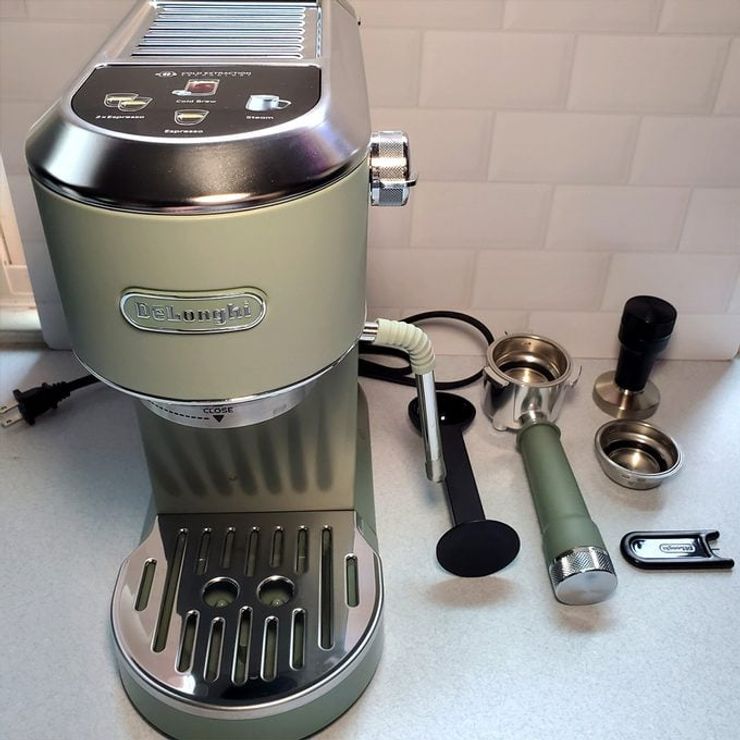
The De’Longhi Dedica Duo (model number EC890) is a compact, single-boiler espresso machine launched in mid-2025. It sits above the existing Dedica Arte in De’Longhi’s lineup and introduces one headline addition: a dedicated Cold Extraction Technology function that runs espresso at low temperature without the heater.
Compared to older Dedica models, the Duo adds a dedicated cold extraction mode alongside standard espresso brewing. It comes in four colorways: EC890M (Stainless Steel), EC890.WI (Vanilla), EC890.PI (Pistachio/Sage Green), and EC890.RO (Rose/Pink).
It’s positioned at beginners and design-conscious buyers who want the full espresso ritual without the steep learning curve of a semi-professional machine.
Specs and Build Quality
| Spec | Value |
|---|---|
| Model | EC890 (EC890M / EC890.WI / EC890.PI / EC890.RO) |
| Pump pressure | 15-bar pump / 9-bar extraction (see note below) |
| Thermoblock | Dual-circuit thermoblock |
| Portafilter size | 51mm |
| Basket type | Pressurized (dual-wall) — single and double shot |
| Water tank | 1.1L removable |
| Width | 5.9 inches (150mm) |
| Weight | 4.2kg (9.3 lbs) |
| Heat-up time | ~25–40 seconds to brew-ready |
| Price (US) | $299.95 (official De’Longhi US price) |
On the 15-bar pump claim: the “15-bar” figure refers to the maximum capability of the vibration pump rather than the actual pressure at the coffee puck during extraction. While espresso is typically brewed around 9 bars in traditional setups, De’Longhi doesn’t publish a confirmed brewing pressure for the Dedica Duo. According to my experience, pressure will shift depending on grind size, dose, and how the pressurized basket regulates flow.
One thing that took some getting used to: the Dedica Duo is light enough that you feel it immediately during the workflow. When you’re twisting the portafilter into the group head and the locking motion requires a firm push , the whole machine can shift on the counter if you don’t anchor it with your other hand. It’s not a dealbreaker, but it’s something nobody mentions and it catches you off guard the first few times. After a week it becomes second nature.
Design and Colorways
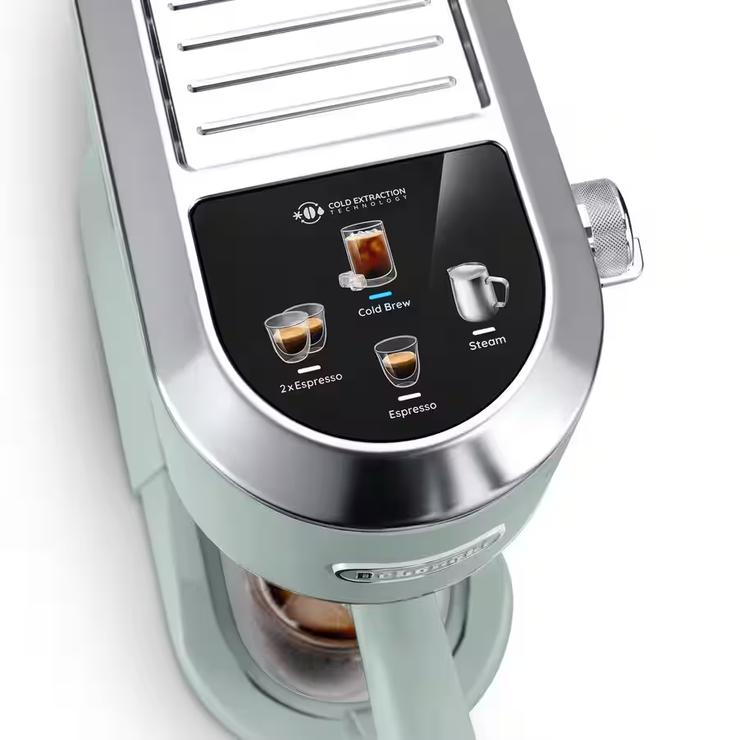
De’Longhi has won multiple design awards for the Dedica line, and the Duo continues that tradition. The body is narrow because it genuinely fits in tight kitchen setups. The drip tray is also lighter than it looks, but at least it slides out easily and rinses clean in a few seconds after use. It is a practical improvement over earlier Dedica models, and the colour-matched portafilter handle is a small touch that makes the machine feel more premium.
The top-mounted control panel features a capacitive touch panel with colourful icons for each function. Worth flagging: it looks like a proper touchscreen in product photos online. In person, it’s capacitive buttons, not a touchscreen. It works perfectly well, but worth knowing so you’re not confused when you tap it expecting a menu and nothing happens.
The knurled steam dial feels good to use, and the cool-touch wand handle is a genuinely useful safety feature. One minor thing I kept noticing during the first few days: the pump has a soft pulsing buzz during extraction, almost like a faint ticking hum every second or two. It’s not especially loud, but in a quiet kitchen at 6am you hear it immediately, especially during the longer cold extraction mode.
Heat-Up Time and Temperature
The dual-circuit thermoblock heats fast — typically 25–40 seconds to brew-ready from cold. Before your first shot of the day, a quick pre-flush of the group head and portafilter is good practice to bring everything up to temperature.
The dual-circuit design means you don’t need to wait between brewing and steaming. You can steam milk immediately after pulling a shot, or pull a shot immediately after steaming. The one exception: if you steam first and want to brew after, run a brief cooling flush through the group head to drop the temperature back to espresso range. Skip it and your shot will be over-extracted.
Espresso Performance — and the Portafilter Truth
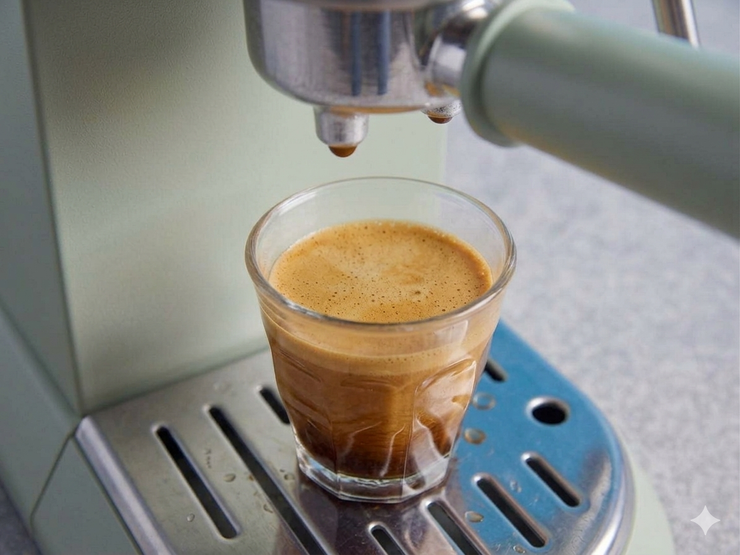
What surprised me most about the Dedica Duo was how approachable it makes espresso for someone who has never used a portafilter machine before. The first time I tried a lighter roast with a finer grind, nothing came out at all — the machine just buzzed against the puck until I stopped the shot. The stock dual-wall baskets clearly prefer medium-to-coarser espresso grinds.
The ritual of it — dosing, tamping, locking in the portafilter — is part of the appeal. After using it daily, I still find myself preferring a shot from this machine over most other options I’ve tried at home.
The trade-off: with specialty beans, dual-wall baskets mute the more nuanced flavour notes. The restricted outlet doesn’t allow the kind of controlled extraction that separates a well-developed Ethiopian natural from a generic supermarket blend. If you’re spending good money on interesting coffee, you’ll eventually feel the ceiling.
Recommended dose: 14g. Target yield: 28g in 24–28 seconds. If your drawdown is running long, grind coarser first before adjusting anything else.
The Cold Brew Feature — What It Actually Is
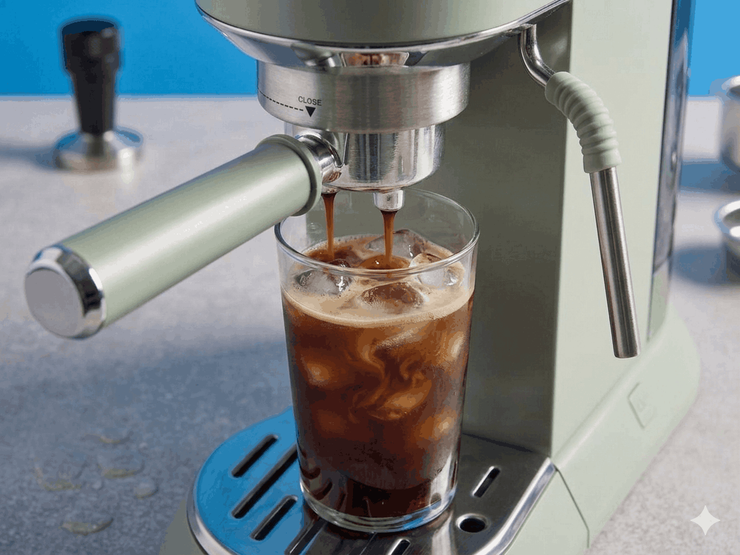
The cold brew function is real, and it genuinely works — but you need to go in with the right expectations. What the machine is actually doing is turning off the heater and running a slow, low-pressure extraction for around five minutes. The output is a cold-temperature espresso concentrate, not the 12-hour steeped cold brew you’d get from a jar in the fridge.
When I tried it for the first time, I was expecting something thin and disappointing. Instead, it came out tart, juicy, and noticeably smoother than a hot shot poured over ice. The cold temperature preserves more of the bean’s natural sweetness — especially with lighter roasts. My go-to is the cold brew shot over ice with a splash of oat milk.
Technical specs: heater off, low pressure extraction, ~5 minutes, output temperature ~25–35°C, ~150ml concentrate from a double shot.
If you want something closer to an iced latte flavour rather than iced espresso, just add more milk. Where the cold brew underperforms is with darker, robusta-heavy beans — that’s where you’ll get bitter and flat results. Stick to medium or light roasts and the output is genuinely worth talking about.
With lighter roasts, the cold extraction mode is genuinely enjoyable: sweeter, smoother, and less aggressive than espresso over ice. Darker blends are less convincing and tend to taste flat. It’s one of the few features that genuinely separates the Dedica Duo from machines like the Bambino at this price point. Just don’t expect traditional 12-hour cold brew.
Steam Wand and Milk Frothing
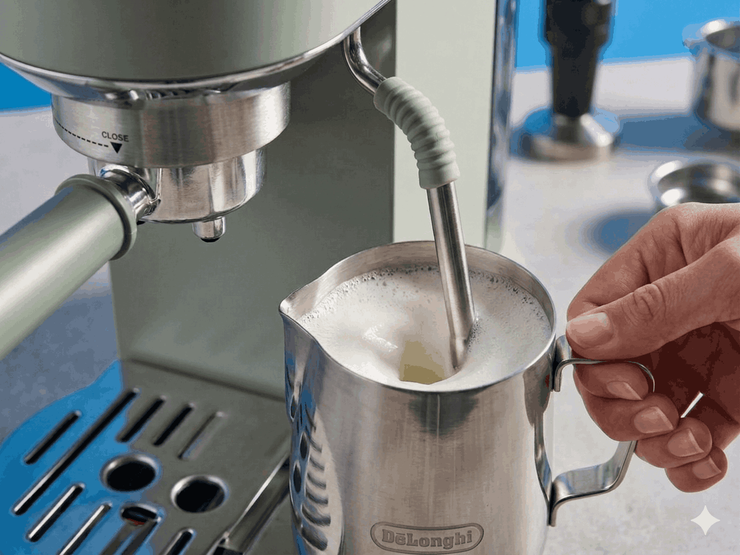
I’ll be straight with you: The steam wand itself is …okay. Even after adjusting technique and purging first, the steam arrives in uneven bursts instead of the smooth, dry pressure you get from stronger machines. If you’re used to a standalone frother or a machine with a stronger steam output, this will frustrate you.
The wand uses De’Longhi’s My LatteArt single-hole tip on a pivoting arm with a cool-touch handle. The cool-touch design is genuinely useful. The steam output is not.
The first second or two of steam is usually wet and sputtery before the pressure stabilises, which explains why purging the wand helps so much. Workaround that actually helps: purge the wand into the drip tray for a good 3–4 seconds before submerging it in your milk. This clears trapped water and gives you a stronger initial burst. Once I got the angle right — tip just below the surface, pitcher tilted to start a whirlpool early — I could reliably get decent foam. Not latte-art quality, but good enough for a morning cappuccino.
Most days, though, I just use my standalone frother. It’s quicker and less effort. If milk drinks are a daily priority, budget an extra $15–25 for a dedicated frother and treat the steam wand as a backup. Compared to the Bambino, the Dedica Duo feels far more design-focused than café-focused. The Bambino disappears into the workflow; the Dedica constantly reminds you it’s a lightweight compact machine working near its limits.
De’Longhi Dedica Duo vs Dedica Arte — Worth Upgrading?
| Feature | Dedica Arte (EC885) | Dedica Duo (EC890) |
|---|---|---|
| Cold brew | No | Yes (Cold Extraction Technology) |
| Control panel | Front push buttons | Top-mounted capacitive panel |
| Drip tray | Standard | Wider |
| Steam dial | Standard knob | Knurled, cool-touch |
| Portafilter handle | Standard | Colour-matched |
| Price | Lower | $299.95 |
If you already own a Dedica Arte, this is not a compelling upgrade unless you specifically want cold brew and iced coffee. The espresso quality is comparable, and the steam wand is weaker on the Duo than the Arte.
If you’re buying new, the Duo is the better-specced machine — the wider drip tray, improved panel layout, and cold brew capability make it worth the premium over the Arte.
What’s in the Box — and What to Add
The Dedica Duo ships with more than most entry-level competitors. In the box:
- •Pressurized portafilter with single and double shot baskets
- •Metal-body tamper (plastic handle)
- •Milk jug
- •Dosing spoon
- •Steam wand needle (for clearing blockages)
- •Manual
What to buy besides the machine:
| Accessory | Approx. Cost |
|---|---|
| 51mm De’Longhi-specific IMS basket [AFFILIATE LINK] | ~$30–40 |
| De’Longhi-compatible 51mm bottomless portafilter [AFFILIATE LINK — confirm DeLonghi-specific] | ~$25–35 |
| Better tamper [AFFILIATE LINK] | ~$20–30 |
| Standalone milk frother [AFFILIATE LINK] | ~$15–25 |
The IMS basket upgrade makes a noticeable difference to shot quality once you’re comfortable with the basics. It’s the one accessory worth prioritising.
Grinder Pairing
The pressurized baskets are forgiving — even a mid-range burr grinder will produce decent results to start. Once you upgrade to the IMS single-wall basket, grind precision matters significantly more. At that point, inconsistent grind size becomes the main variable limiting your espresso quality.
Entry recommendation: Baratza Encore (~$179). [AFFILIATE LINK] Solid, consistent, and widely available. Avoid blade grinders entirely — they produce inconsistent particle sizes that make dialling in impossible.
Cleaning and Maintenance
The Dedica Duo is low-maintenance in daily use. Here’s the routine:
- Daily: knock out the puck, rinse the portafilter and basket under the tap.
- After every steam: wipe the steam wand immediately. The cool-touch design makes this quick and painless.
- Descaling: the steam button flashes orange when it’s time. Use De’Longhi EcoDecalk or a compatible alternative. In my experience, with regular use, this needed doing once or twice over roughly nine months.
- Cooling flush: run a short flush through the group head if you’ve been steaming and want to brew next.
Who Should Buy It — and Who Should Skip It
Buy it if:
- •You’re a beginner who wants consistent, easy espresso without a steep learning curve
- •Cold brew and iced lattes are a regular part of your coffee routine
- •You have a small kitchen or counter space is limited
- •Design matters — you want a machine that looks as good as it performs
- •You’re comfortable using a standalone frother for milk drinks
Skip it if:
- •You want strong, fast steam for cappuccinos and lattes — the Bambino is the better call
- •You’re a specialty coffee enthusiast who wants to dial in with single-wall baskets and explore grind parameters
Verdict — 4 / 5
I’ve been using the Dedica Duo since mid-2025 with no issues at all. I’ve only needed to descale it once or twice over that period. For a machine at this price point, that kind of low-maintenance reliability matters — especially if you’re a beginner who doesn’t want to spend time troubleshooting.
Pros:
- •Stunning Italian design in four colorways
- •Cold brew that genuinely works with the right beans
- •Fast 25–40 second heat-up
- •Wide drip tray (practical improvement over earlier Dedica models)
- •Ships with tamper, milk jug, and both basket sizes
- •Reliable, low-maintenance over nine months of use
Cons:
- •Steam wand is genuinely weak — not an exaggeration
- •Pressurized baskets limit the espresso quality ceiling
- •Lightweight body shifts when locking in the portafilter
The Dedica Duo works best as a beginner-friendly espresso machine for small kitchens and iced coffee drinkers. Whether it’s one of the best-performing ones depends entirely on what you’re making.