Fancy a latte or even an iced latter at home? This is the guide you want.
The first time I made a latte at home without an espresso machine, I was expecting something common: hot coffee with some warm milk dumped on top. What I got was genuinely pretty close to the real thing, and it cost me about eight minutes and zero dollars in new equipment. If you want to make a latte at home without a machine, you almost certainly already have everything you need.
A proper latte is just strong coffee plus steamed, frothed milk. Easy, right? No espresso machine is required as you just need to nail both of those components separately. This guide covers four ways to brew a strong enough coffee base, three ways to froth milk without a steam wand, an easy iced latte method, and the small tweaks that actually make a difference.
What Actually Goes Into a Latte
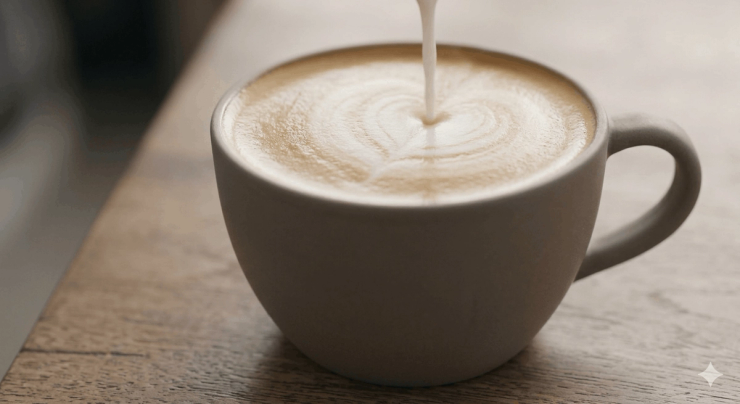
A latte is 1 part espresso + 2 parts steamed milk with a thin layer of foam on top. That ratio is what separates it from other espresso drinks: the milk is the star, the coffee is the backbone.
It's worth knowing how a latte differs from similar drinks so you can adjust to taste:
- •Cappuccino: equal parts espresso, steamed milk, and foam. Stronger-tasting and frothier.
- •Mocha: espresso with chocolate (syrup or cocoa) plus steamed milk, usually topped with whipped cream or foam. Sweeter, richer, and more dessert-like.
- •Flat white: similar to a latte but with a higher coffee-to-milk ratio and microfoam only — no thick foam layer.
For a machine-free latte, i suggest a 2 oz concentrated coffee base combined with around 6 oz of frothed milk. Get those two elements right and the rest is just assembly.
How to Make Espresso Without a Machine (4 Methods)
Let’s start our topic now. The espresso substitute you pick affects the flavor of your entire latte. Here's an honest breakdown:
| Method | What You Need | Strength | Effort |
|---|---|---|---|
| Strongly Brewed Dark Roast | Any coffee maker, dark roast beans, 15:1 ratio | ★★★☆☆ | Low |
| Aeropress | AeroPress brewer, espresso-grind coffee | ★★★★☆ | Medium |
| Moka Pot | Bialetti or similar stovetop brewer | ★★★★☆ | Medium |
| Instant Coffee | Instant espresso powder + hot water | ★★☆☆☆ | Very Low |
Method 1: Strongly Brewed Dark Roast Coffee
This is the simplest option i have tried. Brew your coffee at a 15:1 water-to-coffee ratio (roughly double the amount of grounds you'd normally use). Use a dark roast or espresso-blend for the best flavor — lighter roasts go thin and sharp when used in a latte.
Method 2: AeroPress
The AeroPress is the closest thing to machine espresso you'll get without actually buying a machine. Use a fine grind, a small amount of water (roughly 60ml), steep for 1 minute, and press slowly. The result is concentrated, strong, and genuinely good. It's not technically espresso — there's no crema — but in a milk drink, the difference is hard to detect.
Method 3: Moka Pot (Stovetop Espresso)
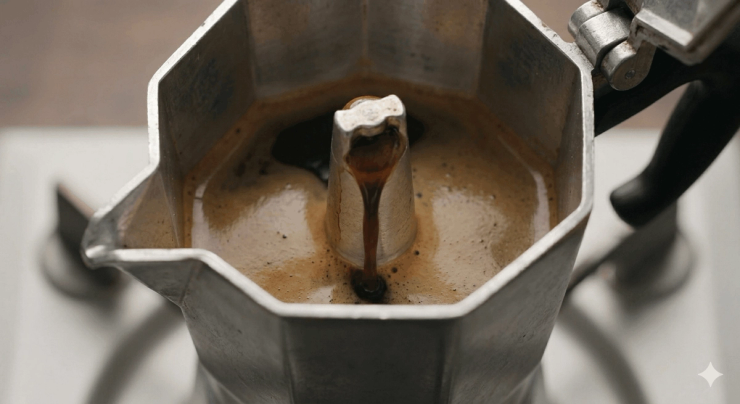
The Bialetti Moka Express brews coffee by pushing steam pressure through finely ground beans and the result is rich, strong, and espresso-like in intensity. It's not true espresso (no crema, lower pressure), but it's excellent for lattes and a worthwhile ~$30 kitchen investment if you make them regularly.
Method 4: Instant Coffee
In a pinch, instant espresso powder dissolved in 2 oz of hot water works as a base. The flavor is thinner and less complex than the other methods, but it's a genuinely fast workaround for a weekday morning when you don't have time to dial anything in.
How to Froth Milk Without a Steam Wand (3 Methods)
This is the section that makes or breaks the whole drink. Frothed milk transforms strong coffee into an actual latte — without it, you just have a milky coffee. Three methods work well at home, in order of result quality:
⚙️ Method 1: Mason Jar (Zero Equipment Needed)
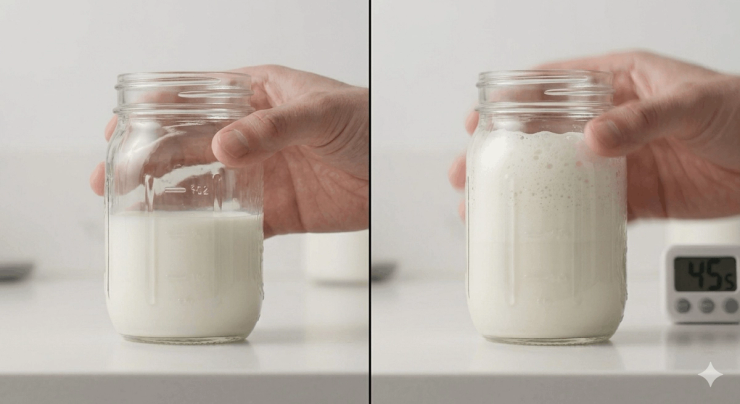
- Pour your milk into a mason jar — fill it no more than halfway.
- Remove the metal lid: microwave the jar with just the milk inside for 30 seconds. Do not microwave the metal lid — fire hazard.
- Seal the jar firmly and shake vigorously for 30–60 seconds until the milk has roughly doubled in volume.
- Pour immediately — the foam settles fast.
Best for: anyone trying this for the first time. Zero cost, uses what you already own.
⚙️Method 2: Handheld Frother (Best Bang for Your Buck)
- Heat your milk on the stovetop to around 155°F / 68°C — it should feel hot to the touch but not scalded. If you overheat it past about 170°F, it stops frothing well and takes on a slightly cooked flavor.
- Submerge the frother wand just below the surface and froth for 20–30 seconds, moving it around the jug in slow circles.
- Pour immediately for maximum foam.
A handheld frother like the Zulay Kitchen Milk Frother runs about $8–10 and takes up no counter space. It's the single biggest upgrade you can make to a home latte for under the price of a coffee shop cup.
Method 3: French Press
- Heat your milk to around 155°F as above.
- Pour the hot milk into your French press — again, no more than halfway.
- Pump the plunger rapidly up and down for 30–45 seconds until the milk is foamy and has increased noticeably in volume.
- Pour slowly to hold back the foam, then spoon the foam on top.
Best for: people who already own a French press and don't want to buy anything new.
DISCOVER: Guide for How to use a French Press
Best Milk for Frothing at Home
Milk fat content affects both froth quality and flavor. Reduced-fat milks actually froth better than whole milk because of their higher whey protein concentration — the tradeoff is a slightly less creamy texture.
| Milk Type | Froth Quality | Flavor in Latte |
|---|---|---|
| Whole Milk | Good — rich and creamy | Creamy, full-bodied |
| 2% Milk | Best froth — higher protein | Slightly lighter than whole |
| Barista Oat Milk | Good — froths close to dairy | Mild, slightly sweet |
| Regular Oat Milk | Thin — inconsistent | Fine flavor, poor foam |
| Almond Milk | Poor — very thin foam | Nutty, can split with heat |
If you're dairy-free, barista-formulated oat milk (Oatly Barista, Califia Farms Barista Blend, etc.) is a significant step up from standard oat milk because it's specifically designed to emulsify and froth.
Step-by-Step: How to Make a Latte at Home Without a Machine
- Brew your strong coffee or espresso substitute (~2 oz / 60ml).
- Heat your milk (~6 oz / 180ml) to 155°F / 68°C.
- Froth using your preferred method until the milk has doubled in volume.
- Pour the hot coffee into your mug.
- Add any sweetener or syrup now — stir it into the coffee before the milk goes in. It distributes far more evenly this way.
- Pour the frothed milk slowly over the coffee, holding back the foam with a spoon.
- Spoon the remaining foam on top and serve immediately.
Quick note on ratio: if you're using strongly brewed coffee instead of AeroPress or Moka pot, use slightly less milk (around 4 oz instead of 6) to keep the coffee flavor from getting lost. The more concentrated your base, the more milk it can carry.
How to Make an Iced Latte at Home Without a Machine
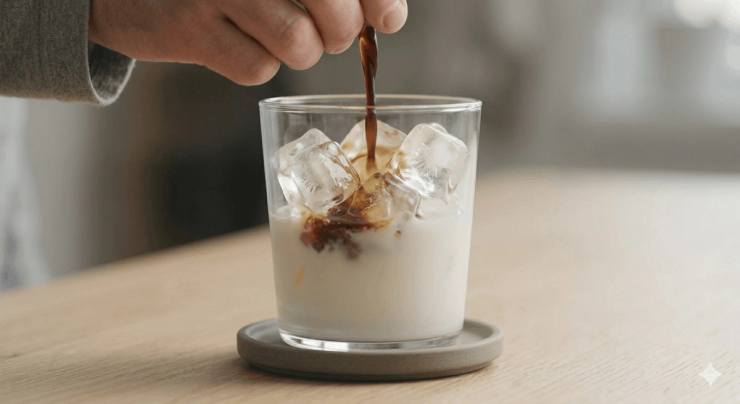
No one drinks hot latte in the summer right? My experience is that making an iced latte without a machine is actually easier than making a hot one because i skip the frothing entirely. Cold milk doesn't need to be steamed or frothed for an iced latte. You just need strong coffee, cold milk, and ice.
The no-machine method is genuinely better suited to iced lattes than hot ones. No frothing skill required, no temperatures to hit. Just get the ratio right.
- Brew your strong coffee or espresso substitute and let it cool for 10–15 minutes (or use cold brew concentrate for zero bitterness).
- Fill a glass with ice — pack it full.
- Pour in your cold milk: use a 1:2 ratio of coffee to milk (e.g., 2 oz coffee to 4 oz milk over ice).
- Pour the cooled coffee over the top.
- Stir, taste, adjust sweetener, drink.
Sometimes i wanna drink an iced vanilla latte, so i add 1–2 pumps of vanilla syrup directly to the glass before the ice. For an iced caramel latte, drizzle caramel sauce around the inside of the glass before assembling.
Latte Variations: How to Flavor Your Homemade Latte
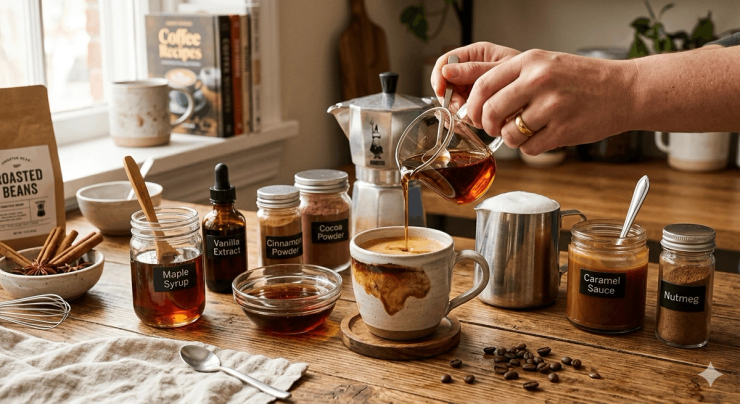
Everytime i go to a cafe, i realize there is a wide flavor options of latte. Actually it’s quite straightforward. Add any of these to the coffee before the milk goes in:
- •Vanilla latte: 1–2 pumps vanilla syrup (or 1/4 tsp vanilla extract)
- •Caramel latte: 1–2 pumps caramel syrup, drizzle on top as a finish
- •Pumpkin spice latte: PSL syrup + a pinch of cinnamon on the foam
- •Brown sugar latte: 1 tsp brown sugar dissolved in the hot espresso before adding milk
Tips for a Better Homemade Latte
- •Use freshly ground beans — even a budget burr grinder makes a noticeable difference to the espresso base.
- •Don't overheat the milk — past about 170°F it stops frothing properly and develops a slightly cooked, flat taste. 155°F is the sweet spot. [NEEDS EXPERIENCE NOTE — a specific time the writer overheated the milk and what happened to the foam]
- •Sweeten in the coffee, not the milk — syrup and sugar distribute far more evenly when stirred into the hot coffee before you pour.
- •Barista oat milk froths significantly better than regular oat milk — if dairy-free lattes keep disappointing you, it's probably the milk, not the technique.
- •Don't fill the mason jar more than halfway — the milk needs room to expand. Overfilling kills the froth.
- •For a stronger latte, increase your coffee dose rather than reducing your milk — cutting milk makes the drink thinner, not stronger.
Conclusion
Making a great latte at home without an espresso machine comes down to two things: a strong enough coffee base and properly frothed milk. The method you use for each is almost secondary to getting those fundamentals right.
Start with the mason jar method and strongly brewed dark roast if you want zero investment. If you're making lattes more than a couple of times a week, a handheld frother (~$10) and an AeroPress (~$35) are the two upgrades that genuinely close most of the gap between home and coffee shop quality.