If your French press coffee tastes bitter or gritty, a few small changes can make all the difference. Get the grind, ratio, and timing right, and you’ll brew a rich, smooth cup every time.
If you've ever made a French press coffee and thought, "Why does this taste so bitter and gritty?" Well, you're not alone. I used to dislike French press coffee because every cup I made turned out bitter and muddy. The French press looks simple. And it is. But "simple" doesn't mean "impossible to get wrong."
Once I started making a few small adjustments, I realized I could actually get a rich, full-bodied cup that’s better than most coffee shops: something that you prefer staying at home with that coffee.
This guide covers everything: the right grind size, the right ratio, how long to brew, and what to do when it goes wrong. Let's get into it.
What Is a French Press (and Why Do People Love It)?
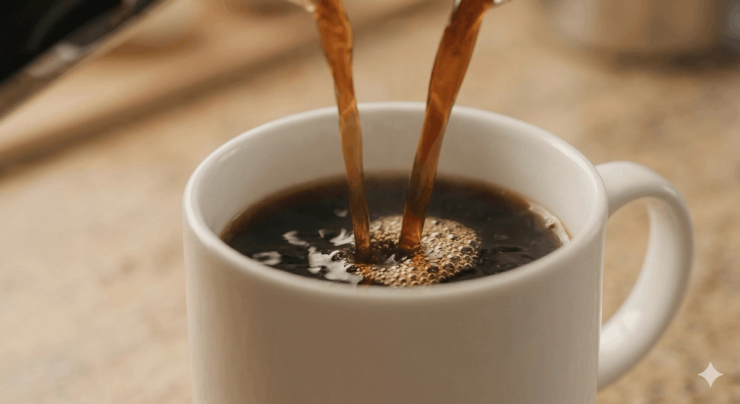
A French press, also called a cafetière in the UK, is an immersion brewer. That just means the coffee sits and steeps in hot water, rather than water passing through it like a filter.
The result? A fuller-bodied cup with more texture and weight than you'd get from a pour-over or drip machine. The natural oils from the coffee beans stay in the cup, giving it that rich, almost silky mouthfeel.
No paper filter, no pods, no electricity. Just coffee, hot water, and a plunger.
What You Need Before You Start
You don't need much. But a couple of things make a big difference.
You don't need a fancy grinder to start. Pre-ground coffee works and just make sure it's ground for French press, which is coarser than espresso or filter grind.
The French Press Ratio: How Much Coffee to Water?
This is where a lot of people go wrong (including myself), either drowning the coffee in too much water, or making it so strong it strips the enamel off your teeth.
The baseline ratio: 1:15 (coffee to water)
So for every 1g of coffee, use 15g (or ml) of water.
| French Press size | Coffee | Water |
|---|---|---|
| 350ml | 23g | 350ml |
| 500ml | 33g | 500ml |
| 1 litre | 66g | 1,000ml |
Don't have scales? No problem. I suggest a rough starting point is 1 heaped tablespoon of coffee per 100ml of water. It's not as precise, but it'll get you close.
Adjust from there. If it tastes weak, add a bit more coffee. If it tastes too strong, add less. Taste is always the boss.
Grind Size: The Thing That Matters Most
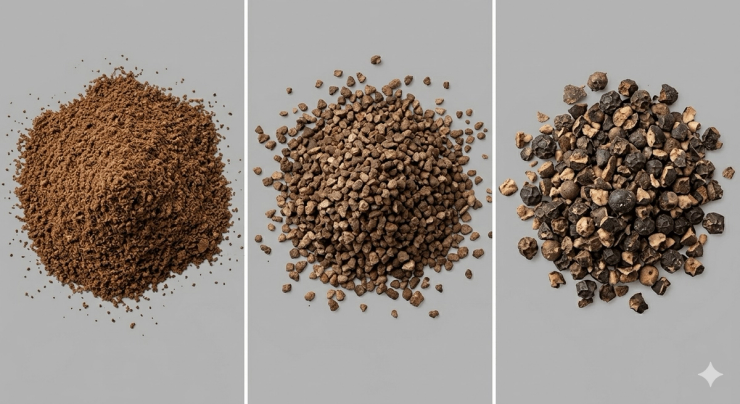
If there's one thing to take from this entire guide, it's this: grind size makes or breaks a French press.
Because there's no paper filter, fine coffee grounds pass straight through the mesh and end up in your cup. That's what causes that unpleasant gritty texture and bitter, harsh taste.
You want a coarse grind. Think rough sea salt or cracked black pepper — not powder, not sand.
| Grind | What It Looks Like | What Happens |
|---|---|---|
| Too fine | Powder / fine sand | Bitter, harsh, gritty, over-extracted |
| Too coarse | Chunky / cracked peppercorn | Weak, thin, sour, under-extracted |
| Just right | Rough sea salt | Full-bodied, smooth, balanced |
Always change one thing at a time. Grind size is your main dial.
How to Make French Press Coffee: Step-by-Step
Here's a clean, repeatable method that works for me most of the time.
The baseline recipe:
- •Coffee: 30g
- •Water: 450ml
- •Water temperature: 93–96°C
- •Brew time: 4 minutes
Step 1 — Preheat your French press
Pour a splash of hot water into the empty press, swirl it around, and tip it out. This keeps your brew temperature stable and stops the glass from cracking.
Step 2 — Add your ground coffee
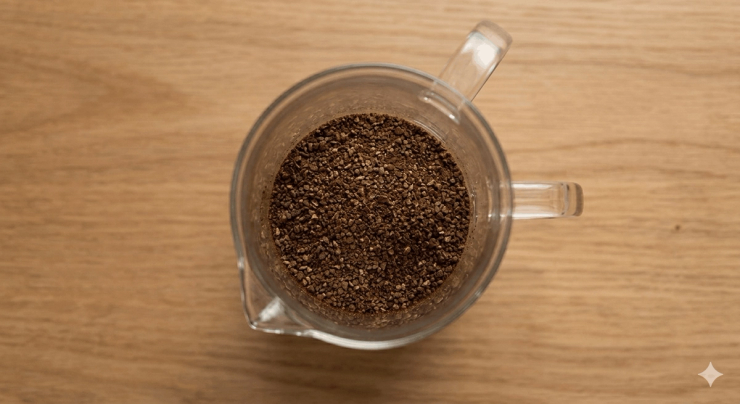
Add your coarsely ground coffee to the empty press. Give it a gentle shake to level the bed.
Step 3 — Start your timer and add water
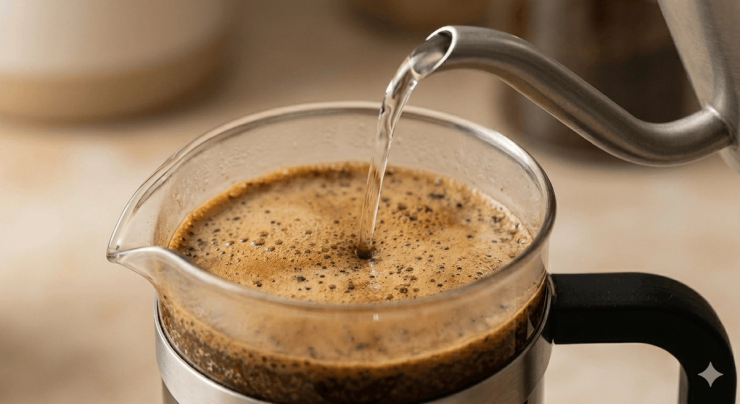
Pour your hot water over the grounds, making sure all the coffee is saturated. Pour slowly and evenly — you want everything wet from the start.
Fill to your target volume (450ml in this case). Start your 4-minute timer now.
Step 4 — Stir and leave it alone
Give the top a gentle stir to make sure there are no dry clumps floating on top. Then put the lid on (plunger up) and don't touch it.
Let it steep for 4 minutes. Resist the urge to plunge early.
Step 5 — Plunge slowly
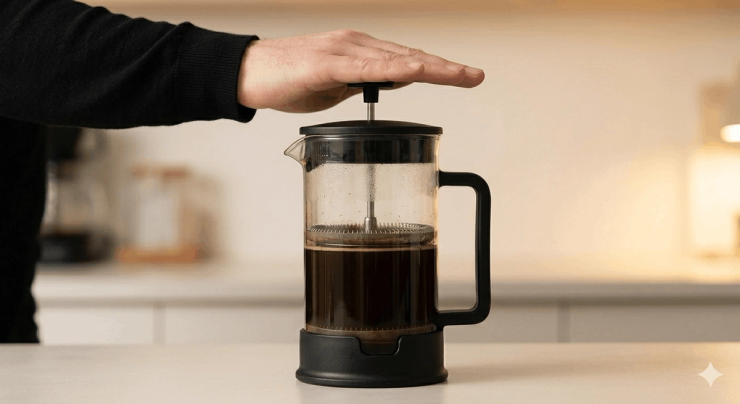
After 4 minutes, press the plunger down slowly and steadily — about 20–30 seconds to reach the bottom. Don't rush it and don't force it.
If it's very hard to push down, your grind is too fine. If it drops with almost no resistance, it's too coarse.
Step 6 — Pour immediately
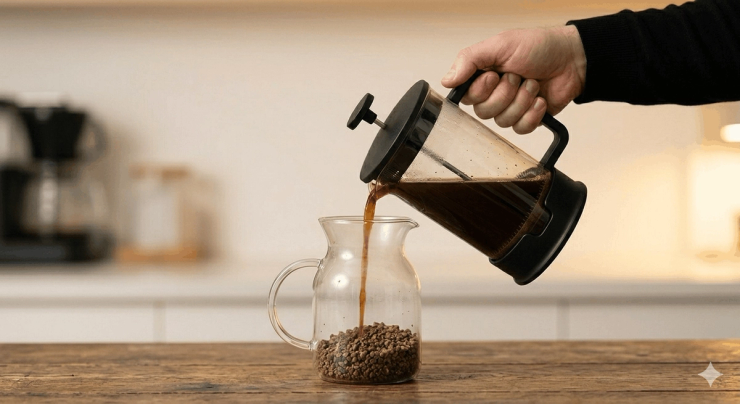
Don't leave the coffee sitting in the French press after brewing. The grounds at the bottom keep extracting even after you've plunged, which makes the coffee turn bitter and harsh.
Pour it all out straightaway — into your cup, or into a separate jug if you're making a batch.
Brew Time: Does 4 Minutes Always Work?
I was recently studying a long Reddit thread about French press timing, and it confirmed what I’ve always suspected: there isn't one "magic" number. While I find that four minutes is a reliable starting point for most people, I’ve learned that you have to be flexible. Brew time can shift slightly depending on your grind and your coffee.
General rule:
- •Coarser grind → you might need a touch longer (up to 4:30)
- •Finer grind → you might want to shorten it slightly (3:30)
But honestly? Taste is the best guide. If it tastes right at 4 minutes, stick with 4 minutes.
*More tutorials? i suggest you to watch a video about James Hoffmann's French Press Method.
Water Temperature: Does It Matter?
Yes definitely! But not as much as grind size. You don't need a thermometer.
My suggestion: boil your kettle and wait 30 seconds before pouring. That brings it down from 100°C to around 93–95°C, which is the sweet spot for most coffees.
Boiling water (100°C) can over-extract some coffees, pulling out harsh, bitter compounds. Slightly cooler water is kinder.
- •Lighter roasts → use slightly hotter water (94–96°C) to draw out sweetness and clarity
- •Darker roasts → slightly cooler is fine (90–93°C) to avoid bitterness
What Does Good French Press Coffee Actually Taste Like?
When you get it right, French press coffee has a distinctive character that other brew methods can't replicate.
Body: Full and heavy — there's real weight to it on your tongue.
Mouthfeel: Slightly oily and smooth. Not thin or watery.
Finish: Lingering and warm. A good cup should leave a clean, pleasant aftertaste — not a dry, chalky bitterness.
Acidity: Lower than pour-over. The immersion process and lack of paper filter produce a rounder, less sharp cup.
I remember a medium-roast natural Ethiopian that hit with rich blueberry and a surprisingly creamy weight. What stood out wasn’t just the flavor, but how it coated the mouth and lingered warm and smooth: no bitterness, just a clean, lasting finish.
Fixing a Bad Cup: Under vs Over Extraction
Every brewer hits this wall. Here's how to diagnose what's wrong.
☕Under-extracted (coffee tastes thin, sour, or weak)
This usually means the coffee didn't give up enough flavour. Common causes:
- •Grind is too coarse
- •Brew time too short
- •Water wasn't hot enough
- •Not enough coffee
Fix: grind a little finer first, then taste again.
☕Over-extracted (coffee tastes bitter, harsh, or dry)
The coffee gave up too much — including the unpleasant compounds.
- •Grind is too fine
- •Brew time too long
- •Left it sitting in the press after plunging
- •Water was too hot
Fix: grind coarser, and make sure you pour out immediately after brewing.
Does the Coffee You Use Make a Difference?
Massively. The French press is a full-immersion brewer — it doesn't hide anything.
Freshly roasted beans, ground just before brewing, will always taste better than pre-ground coffee that's been sitting in a bag for months. That said, a decent bag of fresh pre-ground coffee, ground for cafetière, will still make a great cup — especially if you're just starting out.
Look for bags labelled "coarse grind" or "cafetière grind." Avoid anything labelled espresso grind — it's far too fine and will clog your mesh filter.
As a general rule:
- •Medium roasts tend to work beautifully in a French press — balanced body, pleasant sweetness, easy to dial in
- •Dark roasts produce a bold, chocolatey cup with low acidity — great for those who like a robust brew
Light roasts can work, but they need a slightly finer grind and hotter water to extract properly
How to Clean a French Press (So It Doesn't Ruin Your Next Cup)
Old coffee oils are bitter. If you don't clean your French press properly between brews, those oils build up and taint every cup you make.
After every brew:
- Discard the grounds (tip them into the compost bin — don't put them down the sink in large quantities)
- Rinse the carafe and plunger with warm water
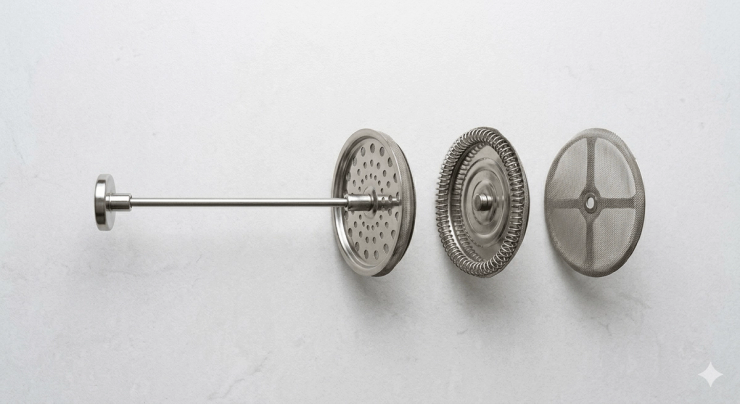
- Give the mesh filter a proper rinse — grounds get trapped in the metal layers
Weekly: Take the plunger apart fully (most unscrew) and wash all the parts with warm soapy water.
It takes two minutes. It's worth it.
Conclusion
French press coffee is one of the most satisfying brews you can make at home — full-bodied, rich, and deeply flavourful when you get it right.
The key things to remember:
- •Coarse grind — this is the most important variable
- •1:15 ratio as your starting point (adjust to taste)
- •93–95°C water — just off the boil
- •4 minutes steep time
- •Pour out immediately after plunging — don't leave it sitting
Get those five things right, and you're most of the way there. The rest is just tasting and tweaking.